How to Spot Cinder Block Wall Seepage in Your Westmont Basement
- Accu-Dry Team
- 6 days ago
- 6 min read
By the Accu-Dry Team
Cinder block walls are one of the most common foundation types in Westmont homes. They're also one of the most vulnerable to moisture. Unlike solid poured concrete, cinder blocks are hollow and porous — and water that builds up in the soil outside your foundation tends to find its way through the mortar joints, into the hollow cores, and eventually into your basement.

The good news: the early signs are readable. Here's how to spot them before a damp wall becomes a bigger problem.
Why Cinder Block Walls Are Prone to Seepage
Every cinder block wall has two built-in vulnerabilities: the blocks themselves are porous, and the mortar joints between them are natural entry points for water. In Westmont, two local conditions push that vulnerability further.
The first is glacial clay. DuPage County sits on dense clay soil that holds water against your foundation long after rain stops. That standing water creates hydrostatic pressure — a force that pushes against the wall from outside and drives moisture through any available gap. (The University of Michigan's structural materials lab has a useful breakdown of how hydrostatic pressure affects leaking basement walls.)
The second is the freeze-thaw cycle. The western suburbs go through 40-plus freeze-thaw cycles a year. When water enters a mortar joint and freezes, it expands by about nine percent. Do that dozens of times across a single winter, and a small gap widens into a real entry point.
What Causes Seepage in Cinder Block Basement Walls
Seepage starts with a combination of factors that most Westmont homes share:
Clay-heavy soil holds water and increases hydrostatic pressure against the foundation.
Poor exterior drainage — sloped lawns, failing downspouts, clogged gutters — lets water collect against the base of the wall.
Mortar joints and block cores are naturally porous, especially in homes built before the 1980s.
Older waterproofing coatings degrade over time, leaving the block surface exposed.
When the pressure exceeds what the wall can manage, or when cracks begin to form, water works its way inside.
Five Signs of Cinder Block Wall Seepage
1. Dark Stains or Discoloration on the Wall
One of the first signs of cinder block wall seepage is discoloration you can't explain. Look for:
Dark patches that appear after heavy rain or snowmelt
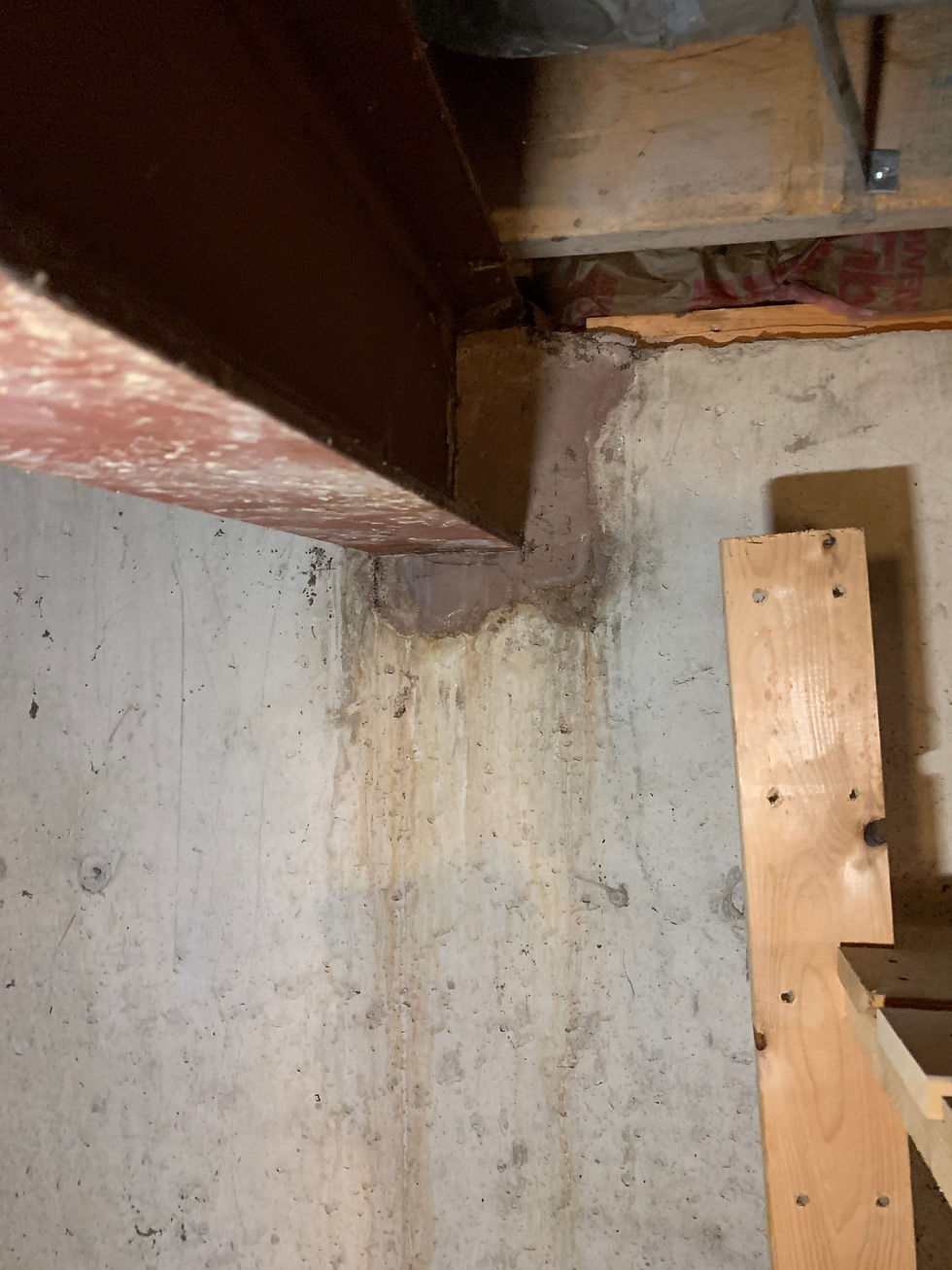
Damp streaks running vertically down the wall face or along mortar joints
Uneven shadowing or color variation near the base of the wall
These stains form where moisture is slowly working through the block and evaporating on the inside surface. The wall may not feel wet to the touch, but it's actively absorbing and passing water.
2. White Powdery Residue (Efflorescence)
Efflorescence is the chalky white deposit left behind when water evaporates and leaves mineral salts on the wall surface. It shows up where water is moving through the block consistently — and it's one of the clearest diagnostic signs for seepage.
You'll typically find it along the bottom row of blocks, around mortar joints, or in patches that match areas of earlier discoloration. It's not dangerous by itself, but it tells you the seepage is real and ongoing.
3. A Musty or Damp Smell
Before you can see moisture, you'll often smell it. A musty, earthy odor in the basement signals elevated humidity, damp materials, or early mold growth — all of which can trace back to wall seepage.
In finished basements, drywall or carpeting can hide the visible signs while the smell develops. If you notice dampness but can't locate it, check along the perimeter of the foundation walls and especially the corners, where water tends to collect first.
4. Visible Water After Rain
In more advanced cases, seepage becomes visible water. You may see:
Dripping from mortar joints during or after a heavy storm
Wet streaks running down the wall face
Pooling water along the floor where the wall meets the slab
This typically means the hollow cores of the blocks are filling with water and releasing it through seams and cracks. Repeated wet-dry cycles wear down the mortar and widen those paths over time — this kind of seepage tends to get worse, not better, without intervention.
5. Peeling or Bubbling Paint
Painted cinder block walls often show seepage as blisters, bubbles, or flaking in the paint film. Water is pushing through from the outside and breaking the bond between the coating and the block surface.
Watch for:
Paint blisters or soft spots on the wall surface
Cracks or flakes that grow over time, especially near the base of the wall
New damage appearing where discoloration or efflorescence is also present

This is frequently mistaken for old paint simply failing. In most cases, it's a symptom of the seepage behind it.
What to Do When You Spot Seepage
Cinder block wall seepage doesn't resolve on its own. Here's the path forward once you've noticed the signs.
Schedule a free inspection. At Accu-Dry, every inspection is no-cost and no-obligation. Our team assesses your foundation walls, drainage conditions, and water entry points, then tells you exactly where the moisture is coming from and what it takes to stop it.
Schedule your free inspection at accudrybasements.com/contact or call (630) 663-4598.

Consider an interior drain tile system. For most cinder block seepage in the western suburbs, an interior drain tile system is the most reliable long-term solution. It relieves the hydrostatic pressure driving water through the wall and routes any moisture that does enter to a sump pump before it reaches your floor. We also drill weep holes at the base of the first block row to release water trapped in the hollow cores.
Add a vapor barrier. After the drainage issue is controlled, a vapor barrier or wall panel system prevents residual moisture from entering the basement air — and makes the space significantly easier to finish cleanly.
"We walk a lot of basements in this area, and cinder block walls are almost always where the story starts. The clay holds the water, the freeze-thaw cycles do the work, and the wall tells you about it through stains and efflorescence — if you know what you're looking at. Most people have had these signs for months before they call." — The Accu-Dry Team, serving DuPage County since 1990
Frequently Asked Questions
Q: How do I tell cinder block seepage apart from condensation?
Condensation forms when warm, humid outdoor air contacts a cold wall surface — typically in summer. It appears across a wide area and clears when outdoor humidity drops. Seepage, by contrast, tracks with rainfall: it shows up in the same spots after storms, concentrates along mortar joints and at the block base, and doesn't respond to ventilation alone. If the moisture pattern follows weather rather than temperature and humidity, seepage is the more likely cause.
Q: Can I seal cinder block seepage from the inside with waterproofing paint?
Interior coatings can slow surface moisture temporarily, but they don't address the hydrostatic pressure that is actually driving the problem. Paint and block sealers fail over time as water pressure builds behind them. Interior coatings are better used after the drainage issue is resolved — not as a standalone fix. For information on waterproofing a concrete block foundation properly, U.S. Waterproofing's learning center has a useful overview of the approaches and where each one applies.
Q: How much does cinder block seepage repair cost in Westmont?
It depends on the source and extent of seepage. We provide a written estimate after every free inspection, so you know what you're looking at before committing to anything.
Q: Does cinder block seepage mean my foundation is failing?
Not automatically. Seepage through mortar joints and block cores is primarily a water-management problem, not a structural failure. It becomes a structural concern when the wall also shows horizontal cracking, inward bowing, or visible movement. We assess both at every inspection and tell you directly which situation you're dealing with.
Q: How do I know if the seepage is getting worse?
Mark the moisture stains and efflorescence with pencil and write the date. Check again after the next heavy rain. Growing stains, new drip points, or expanding efflorescence mean the problem is progressing. Horizontal cracking — especially stair-step cracking along mortar joints — or any appearance of inward wall movement warrants a call right away. Those are structural signals, not just moisture ones.
Don't Wait — Early Seepage Is the Easiest to Fix
Cinder block wall seepage in Westmont basements is common, manageable, and almost always less costly to address early than after it's had a season to grow. If you've spotted any of the signs above, the next step is a free inspection — no obligation, no pressure.
Call Accu-Dry at (630) 663-4598, or request your free estimate online. Family-owned, 5-star rated on Google, serving the western suburbs since 1990.

Comments