.png)

5 Warning Signs of Sill Plate Seepage in Your Basement
By The Accu-Dry Team | Basement Waterproofing Specialists, Accu-Dry
Water doesn't always announce itself. By the time you notice pooling on the basement floor or a soft spot in the drywall, sill plate seepage has often been working its way through your foundation for months. Catching it early is what separates a straightforward waterproofing fix from a full structural repair.
Here are the five signs to look for — and what each one is telling you.
What is a Sill Plate?
The sill plate is the horizontal wooden board that sits on top of your concrete foundation wall. It is the first piece of wood in your entire home's frame, and every wall stud and floor joist above it depends on it staying solid and dry.
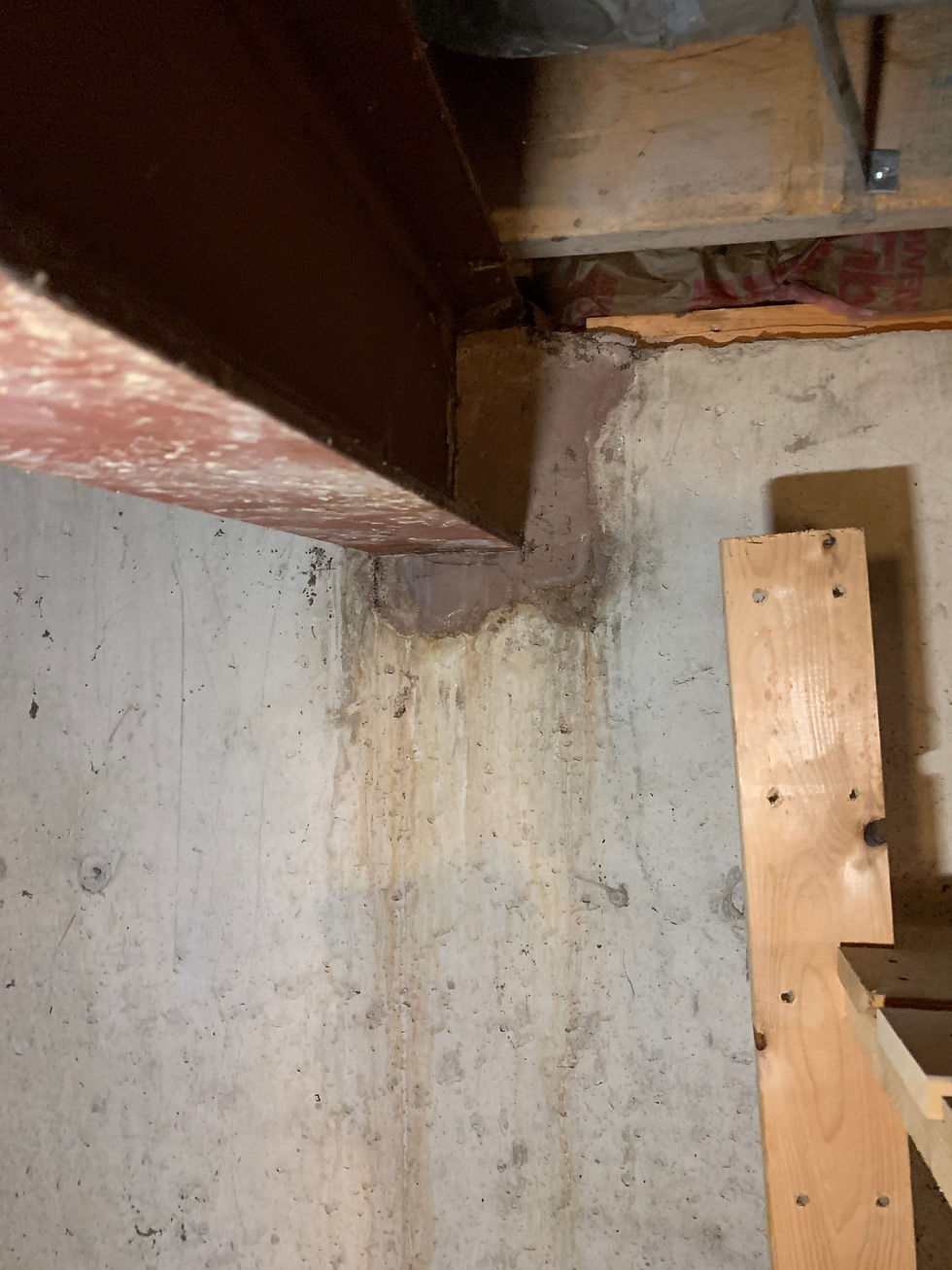
Because it sits between the concrete and the framing — mostly out of sight — damage can develop quietly. The signs below show up before the sill plate itself fails, which means you still have time to act if you know what you're looking at.
5 Warning Signs of Water Leaking Through Your Sill Plate
1. A Persistent Musty or Earthy Smell Near the Floor
A musty odor that concentrates near the base of your basement walls — especially after rain — is usually mold or mildew feeding on damp wood. If the smell is strongest at the wall-floor joint, sill plate moisture is a likely culprit, even when you can't see any water. The smell appears early; visible damage comes later.
2. Discoloration or Staining at the Base of Walls
Look for brown, gray, or rust-colored staining in the lower two feet of your basement walls, particularly at corners and seams. This is often efflorescence — the mineral residue left behind as water wicks through concrete and evaporates. It indicates that water is regularly moving through the wall, and it's a reliable early marker of ongoing seepage.
3. Soft, Warped, or Swollen Baseboards
Wooden baseboards that feel spongy, pull away from the wall, or show visible warping have been absorbing moisture over time. Baseboards sit right at floor level, directly at the sill plate zone, so they react early to moisture in that area. Press gently along the base of any wooden trim: if it gives more than it should, take it seriously.
4. Mold or Mildew on Walls or Exposed Floor Joists
Visible mold — dark patches, fuzzy growth, or a white powdery bloom — on basement walls or on the underside of floor joists confirms persistent moisture. Floor joists attach directly to or above the sill plate, so mold in those areas typically traces back to sill plate seepage rather than a roof or plumbing issue. If you see it up in the joist area, the source is usually below.
5. Water Appearing at the Wall-Floor Joint After Rain
A thin line of water forming where the wall meets the floor during or after heavy rain is hydrostatic pressure pushing groundwater up through the joint — exactly where the sill plate sits. Even a small trickle after every storm will worsen over time, especially in spring when Chicagoland soils are saturated from snowmelt. This one moves fast once it starts.
Most homeowners don't look at the sill plate zone until something else catches their attention — a musty smell, a soft spot in the trim. By then, the wood is often already compromised. The earlier you catch seepage in that area, the simpler and less expensive the repair. — The Accu-Dry Team, Westmont, IL
What's Actually Causing the Leak?
Sill plate seepage has a short list of causes — and most are fixable once you know which one applies:
Hydrostatic pressure: Saturated soil pushes against the foundation wall from outside. Water follows the path of least resistance, often up through the wall-floor joint and into the sill plate zone.
Poor soil grading: If the ground slopes toward your house rather than away from it, every rainstorm drives water toward the foundation. This is common in older Chicagoland homes where settling has changed the original grade over decades.
Clogged or undersized gutters: Overflowing gutters dump water directly alongside the foundation, saturating the soil at the base of the wall over time.
Foundation cracks: As concrete settles, small cracks develop. Water finds them — especially when hydrostatic pressure is high after a heavy rain.
Deteriorated joint caulking: Original caulk at the wall-floor seam dries out and pulls away, leaving an open channel for water to enter.

Why Acting Early Protects Your Home
A saturated sill plate is not just an odor problem. Left untreated, persistent moisture leads to wood rot that weakens the structural connection between your foundation and your home's framing above it. Sill plate seepage is one of the most-missed signs of foundation water damage — and one of the ones that becomes expensive the longer it goes unaddressed.
The fix at the sill plate stage — sealing the wall-floor joint, correcting drainage, or installing an interior drain tile system if the source is hydrostatic pressure — is far more contained than repairing rotted joists or a compromised frame. Addressing it now is the straightforward option; waiting is what makes it complicated.
How Accu-Dry Diagnoses and Repairs Sill Plate Seepage
Accu-Dry's free basement inspection starts at the source. A technician examines the foundation wall, the wall-floor joint, and the sill plate zone for signs of active seepage, wood degradation, and efflorescence. No guessing — you get a clear explanation of what's happening and why.
Based on the inspection findings, solutions range from targeted crack injection and joint sealing to a full interior drain tile system that redirects water before it ever reaches the wood. Every interior waterproofing system Accu-Dry installs comes with a lifetime transferable warranty — protection that stays with the home, not just the current owner.
Serving Westmont, Downers Grove, Naperville, and the broader Chicagoland western suburbs since 1990.
Frequently Asked Questions
Q: Can sill plate seepage be repaired without major excavation?
In most cases, yes. Interior waterproofing solutions — including drain tile systems and wall joint sealing — address sill plate seepage from inside the basement. Exterior excavation is rarely needed unless there is significant foundation damage that can't be addressed from the interior.
Q: How do I know if the musty smell in my basement is from sill plate seepage?
If the odor is strongest near the base of the walls — especially after rain — and you also notice staining or soft baseboards in the same area, sill plate seepage is a likely source. A professional inspection is the only way to confirm it. Accu-Dry offers free inspections with no obligation.
Q: Is sill plate damage covered by homeowners insurance?
Most standard homeowners insurance policies do not cover gradual water seepage or wood rot from ongoing moisture infiltration. Sudden accidental damage (like a burst pipe) may be covered. Check your policy — and address the seepage regardless, since unresolved moisture damage reduces home value and may affect a future sale.
Q: How much does sill plate seepage repair cost?
Cost depends on the source of the seepage and how far the moisture has spread. Minor joint sealing is at the lower end; a full interior drain tile system runs higher. Accu-Dry provides free inspections and free quotes — the right first step is getting eyes on it before estimating anything.
Q: How do I prevent sill plate seepage from coming back?
Three things help most: proper soil grading (sloping away from the foundation for at least the first 6 to 10 feet), functioning gutters with downspout extensions that discharge well away from the house, and routine basement checks after heavy rain. If the root cause is hydrostatic pressure from the soil, an interior drain tile system is the most reliable long-term solution.
—
If you've noticed any of these signs in your basement, don't wait for the problem to grow. Accu-Dry offers free basement inspections for homeowners across the Chicagoland western suburbs — no obligation, no pressure.
Call (630) 663-4598 or contact us online to schedule yours.


Comments