.png)


Basement Floor Seepage Repair in Downers Grove
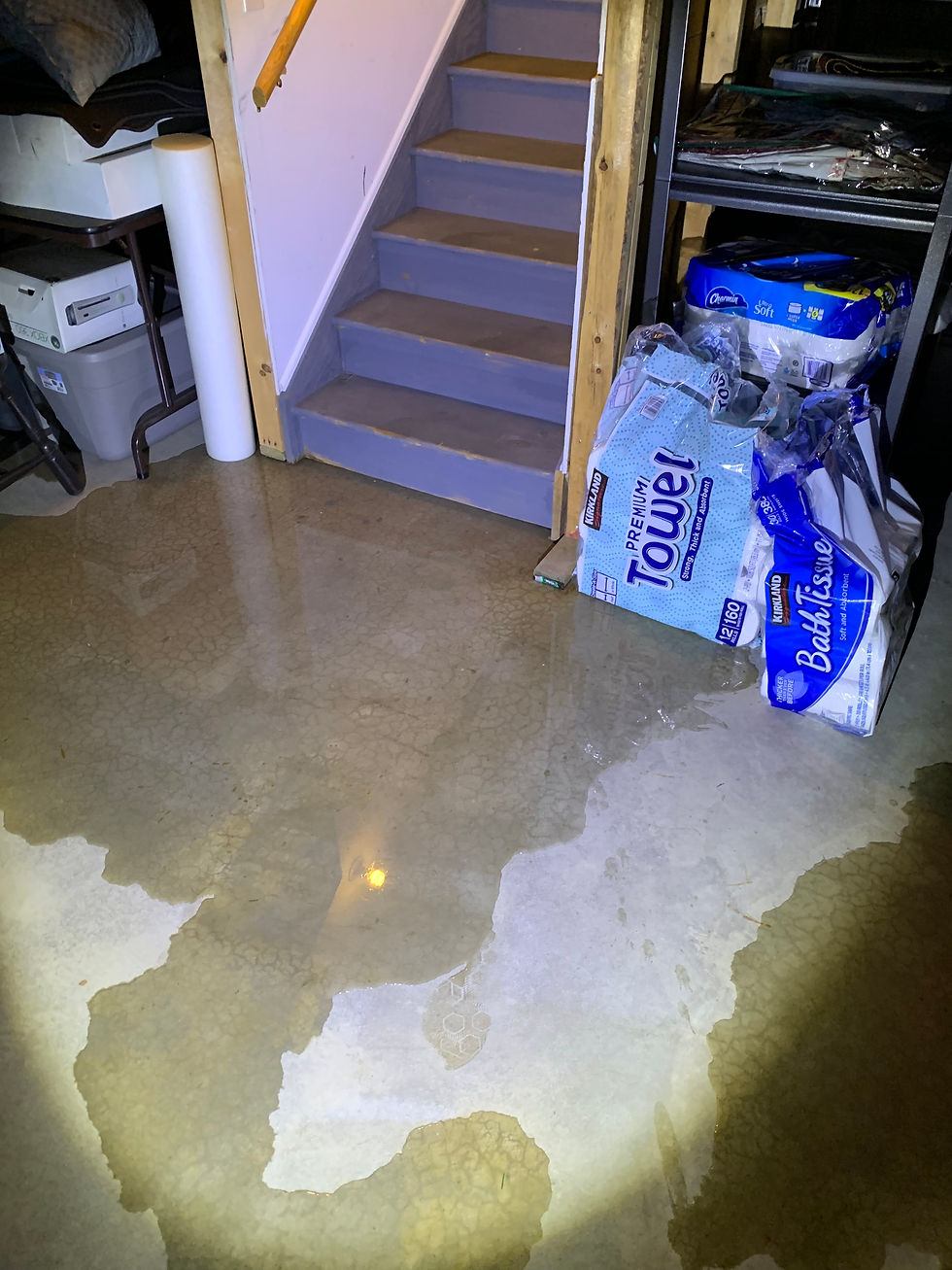
Water coming through your basement floor is a pressure problem, not a crack problem. Sealing the floor does not fix it.
Family-Owned Since 1990
Transparent & Affordable Pricing
Free Basement Inspections
5-Star Rated Locally

Get a Free Floor Seepage Diagnosis
When water seeps through a basement floor — whether through hairline cracks, at the cove joint, or as a general dampness across the slab — it is being pushed upward by hydrostatic pressure from below. The groundwater table beneath your home rises after rain and snowmelt, and if it rises high enough, it forces water through every available path in the slab. In our clay soil, where water drains slowly and the water table fluctuates significantly with the seasons, floor seepage is one of the most common complaints we hear. In a typical Illinois clay soil profile, post-storm groundwater levels can rise several feet in hours — generating enough upward pressure to push water through hairline cracks in a 4-inch concrete slab.
Why Sealing the Floor Does Not Work
Surface sealers and waterproofing paint products cannot withstand the pressure of a rising water table pushing upward against the slab from below. The hydrostatic force on the underside of a saturated slab can exceed 100 pounds per square foot — far beyond what any topical coating adheres against. Sealers peel, pop, and blister. The water finds another path. The only durable solution is to relieve the pressure.
Where Floor Water Comes From
The Cove Joint
The joint where your basement floor meets the foundation wall is not a sealed connection — it is a construction gap. As hydrostatic pressure rises beneath the slab, water pushes through this joint and runs across the floor. This is the single most common floor-level water entry point in western-suburb basements.
Slab Cracks
Settlement, shrinkage, and freeze-thaw cycles create hairline and wider cracks through the slab. A rising water table uses these cracks as entry points, producing wet streaks across the floor after heavy rain.
Porous Concrete
Older slabs with high water-to-cement ratios are more porous than modern concrete. In homes built before 1970, a damp floor that never shows defined cracks or joint seepage may simply be water wicking through the slab itself — driven by pressure and capillary action.

The Right Solution: Pressure Relief
We install an interior perimeter drain system at or below the footing level. This channel intercepts groundwater before it builds pressure against the underside of the slab, routes it to a sump pit, and removes it from the home. Once the pressure is relieved, water stops pushing through the floor.
Inspection: We identify entry points, assess slab condition, and check exterior drainage factors.
System design: We size the drain channel and sump for your specific water volume and basement perimeter.
Installation: Perimeter channel is installed below the slab, connected to a sump pit with a properly rated pump.
Restoration: Concrete is poured to cover the channel and finish flush with the floor.
What Neighbors Say
★★★★★ 5-star rated across the western suburbs
★★★★★
Excellent service from Connor who explained the job to Israel and Juan who came out and installed drain tiles to stop the seepage.
— Mark Forzley, Google review, 2026.02.16
★★★★★
I've been very happy with Accu-Dry across the whole experience. Justin has been extremely responsive and brings a ton of expertise. Israel, who did the work, is prompt, professional, and did a great job.
— James MacLeod, Google review, 2026.06.23
★★★★★
Very knowledgeable person did the work at my house. Did a very thorough clean up after the work was completed.
— K W , Google review, 2026.06.21
Why Accu-Dry
We diagnose the cause — not just the symptom. We identify whether seepage is coming from the cove joint, slab cracks, or general slab porosity before recommending a system.
Drainage systems rated for local water volume. We size every system to handle peak storm load — not average conditions.
Lifetime transferable warranty. Our floor seepage solutions are backed for the life of your home.
35+ years in local basements. We have resolved floor seepage in basements across Downers Grove, Lombard, Naperville, and the surrounding suburbs, and we are 5-star rated and BBB-accredited. Illinois clay soil is what we know.
Serving the western suburbs
Downers Grove · Westmont · Naperville · Hinsdale · Lisle · Woodridge · Clarendon Hills · Lombard · Wheaton · Glen Ellyn
Frequently Asked Questions
Is floor seepage dangerous to ignore?
Yes, over time. Persistent floor moisture elevates indoor humidity, promotes mold growth in floor framing and wall cavities, and accelerates rust and corrosion on HVAC equipment, appliances, and stored belongings. In finished basements, it destroys flooring, drywall, and insulation. The longer it goes unaddressed, the more collateral damage accumulates.
Does floor seepage mean my foundation is failing?
Not necessarily. Floor seepage driven by hydrostatic pressure is a drainage and water management problem, not always a structural one. We assess both — if we see structural concerns during the inspection, we will tell you directly.
Why does it only happen after heavy rain?
Because the water table beneath your home rises during and after significant rainfall. When it rises high enough to reach the underside of your slab, pressure builds and seepage begins. As the table drops, seepage stops. The predictable pattern is a diagnostic signal: hydrostatic pressure is the cause.
What does floor seepage repair cost?
Most floor seepage solutions involve interior drain tile installation, which ranges from $5,000 to $12,000 for a typical basement in the area, depending on perimeter and water volume. We provide a written estimate after every free inspection.
Will a dehumidifier fix floor seepage?
No. A dehumidifier removes moisture from the air inside the basement but does nothing to stop water from entering through the floor. If hydrostatic pressure is pushing water up through the slab or cove joint, it will continue to do so regardless of how well the air is conditioned. Running a dehumidifier over an active seepage problem also puts significant wear on the unit and raises your energy bill without addressing the source. The right solution relieves the pressure — the dehumidifier becomes optional once that is done.